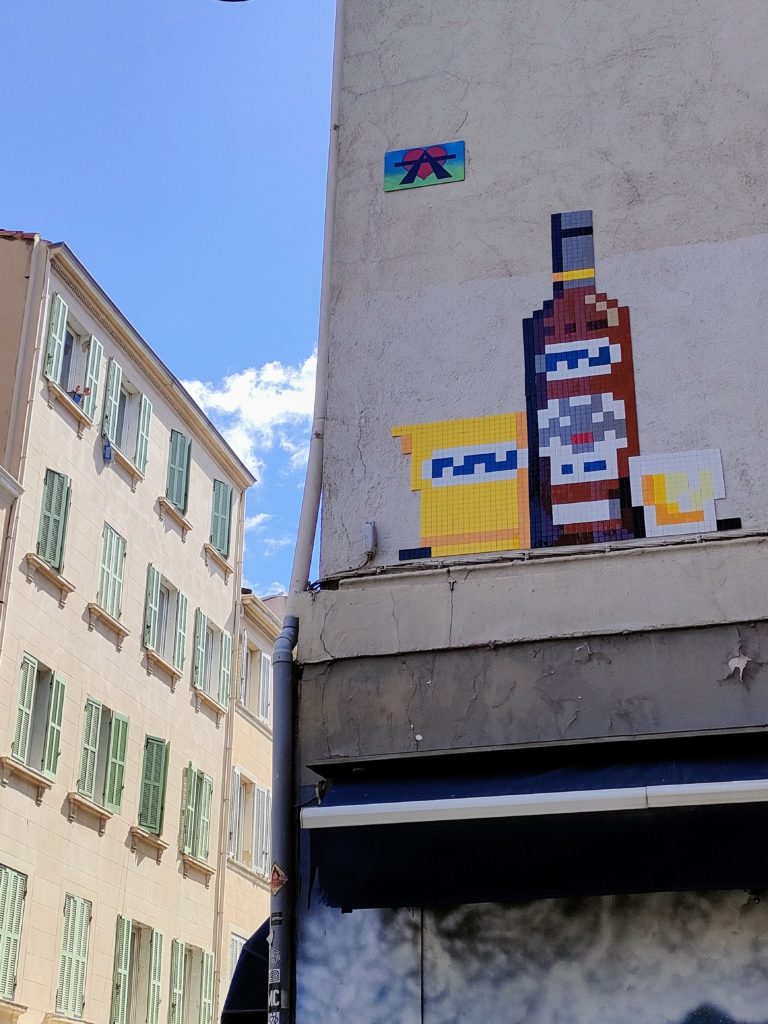
Some neighbourhoods exist on maps, and others exist in people’s memories. Cours Julien, La Plaine, Notre-Dame-du-Mont — call it what you like, it always spills over its official boundaries. It is a triangle of streets between the bottom of the Canebière and the slopes of Le Camas, an area a few hundred metres across where, for decades, lives have crossed that might never have met.
A working-class neighbourhood first. A neighbourhood of market gardeners, craftspeople and last century’s immigrants, who brought their habits to its cafés and courtyards. Then a counterculture neighbourhood in the 1980s and 90s, when cheap rents and empty warehouses drew in artists, associations, zines and sound systems. And now — slowly, surely — a coveted neighbourhood, a neighbourhood in transformation, one whose residents sometimes watch the changes with legitimate concern.
This page is not a tourist guide. It is an attempt not to forget where it all comes from.
Wasteland, market gardens,
a growing city
Cours Julien takes its name from a former market garden that stretched across what is now the esplanade. Through the demolitions and rebuilding of the 19th and 20th centuries, the vegetable plots gave way to a dense, eclectic neighbourhood built without much of a master plan. Perhaps that is why it has kept its particular texture — streets that do not always meet at right angles, buildings that seem to have been set down almost by chance, cellars that become music venues.
Place Jean-Jaurès — which everyone calls “La Plaine” — was for a long time the beating heart of the working-class neighbourhood. A market three times a week, café terraces spreading across the tarmac, old men playing pétanque, kids hanging around. An old-style square, functional, worn, alive precisely because it was not pretty.
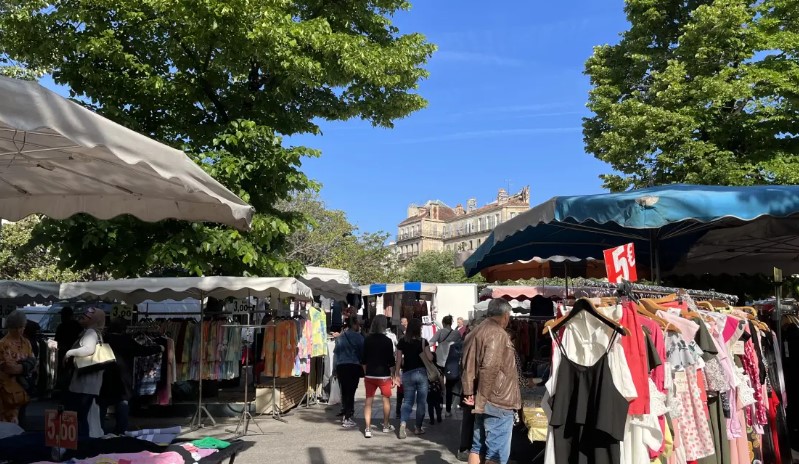
The La Plaine market, place Jean-Jaurès
The Espace Julien,
four decades of sound
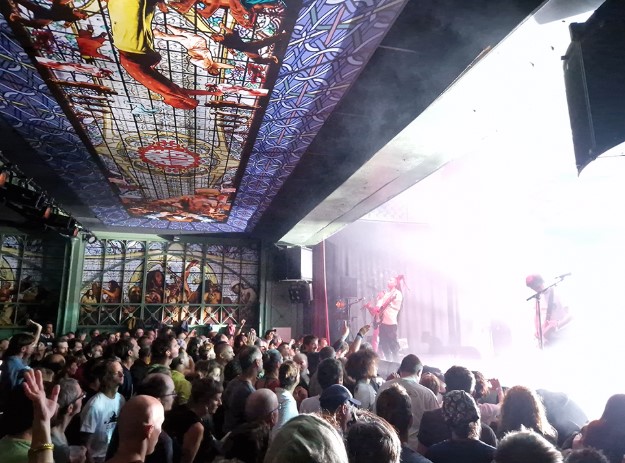
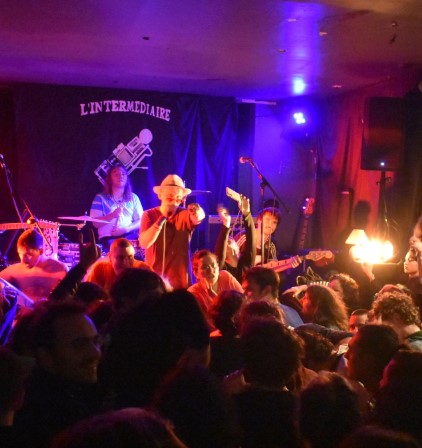
In 1984, a former market-garden hall was turned into a performance venue. It became the Espace Julien — a community centre that would gradually grow into one of the most important contemporary music venues in the south of France. Not through millions spent on architects or grand cultural policies, but through the stubborn determination of people who loved music and sharing it.
In forty years, the venue welcomed Chet Baker and Stan Getz in its early jazz years, then La Mano Negra, Paco de Lucía, Archie Shepp, Arthur H, Zazie, Kid Francescoli. Legends and newcomers. International tours and the first gigs of local artists who, a few years later, would be playing arenas. The Espace Julien had a rare gift: letting the two coexist without anything ringing false.
“A small neighbourhood venue that gradually turned into a cultural institution where great artists of contemporary music and comedy left their mark. A small-scale story that carries within it the story of a whole generation.”
In 2023, after 39 years and some 8,000 shows, the Espace Julien changed hands. The association La Responsabilité des Rêves — born from the coming together of Le Makeda, the Théâtre de l’Œuvre, La Meson and the Espace Julien — took over the keys. The venue reopened on 22 September, with a new look and the same ambition. The story goes on.
In 2024, Éditions Parenthèses published Espace Julien, une aventure musicale à Marseille (Patrick Coulomb, Marie-Hélène Balivet), a book that traces those four decades through stage photos, posters and artists’ accounts. A fine book about an unlikely place that changed a city’s cultural life.
Street art,
or the city writing itself
Since the 1990s, Cours Julien has been one of Marseille’s street art hotspots — and one of the few places in France where walls have been officially made available to artists without turning into a sanitised open-air museum. The works change, overlap, talk to each other or fade away. Some last for years, others are covered over within weeks.
It is a collective, ephemeral form of writing. The neighbourhood’s walls tell the story of the city as its residents see it.
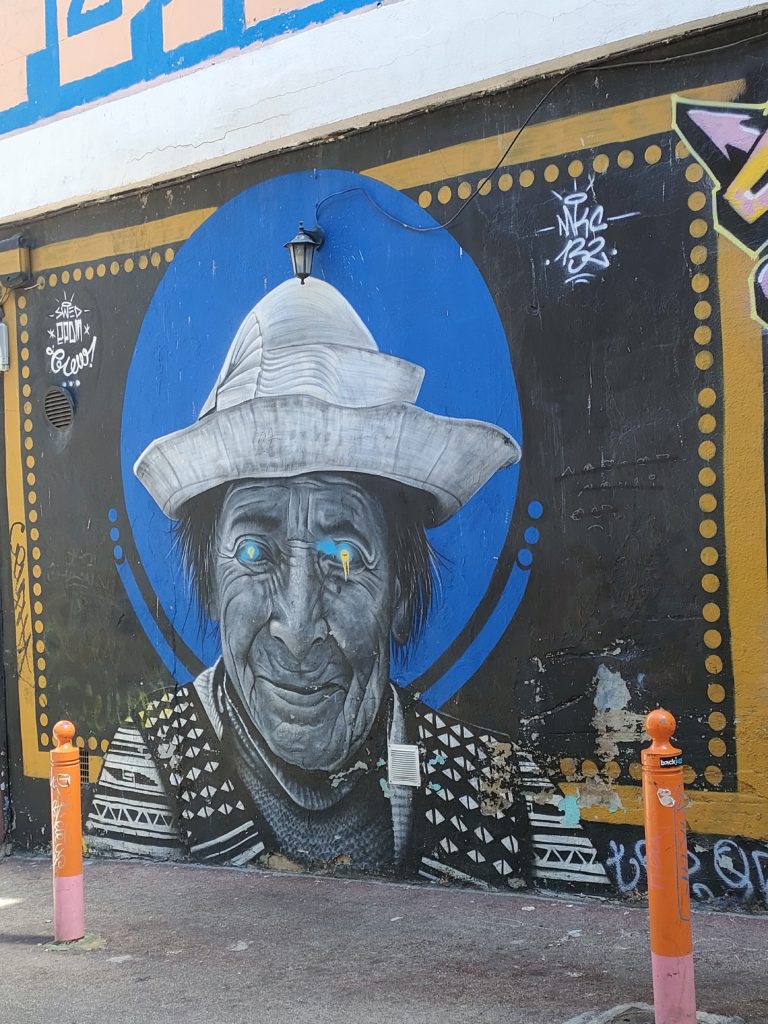
Street art, Cours Julien
The concrete wall
and the battle of La Plaine
In 2016, Marseille city council announced an “urban regeneration” project for place Jean-Jaurès. Regeneration — the word is gentle, almost neutral. What it covered was less so: a complete redevelopment of a working-class square, changes to its market, a transformation of how it was used. Some residents immediately saw what that meant in practice: the planned disappearance of what gave the neighbourhood its life, in favour of a cleaner, smoother space, more appealing to a different clientele.
For three years, the neighbourhood resisted. General assemblies, occupations, demonstrations, negotiations that led nowhere. A long, exhausting mobilisation, carried by people who had other things to do but cared about their square, their market, their way of living in the city.
“Marseille, February 2019: La Plaine is encircled by a 2.5-metre-high wall to make sure the works go smoothly, locking away the dream of a neighbourhood made by its residents.”
In February 2019, the council had a 2.5-metre-high concrete wall put up around the whole square overnight. A staggeringly brutal decision — the kind of gesture that tells you everything about the relationship between an institution and the people it serves once dialogue has broken down. The market was suspended. The square vanished behind the concrete. The neighbourhood lived with that scar for months.
This story was filmed. La Bataille de la Plaine, directed by Sandra Ach, Nicolas Burlaud and Thomas Hakenholz for the Primitivi collective, is a documentary shot between 2016 and 2020 that follows the struggle from the inside. It is not just a film about urban redevelopment — it is a film about memory, about what is lost when a city decides to change its face, and about what people do so as not to let what belongs to them disappear.
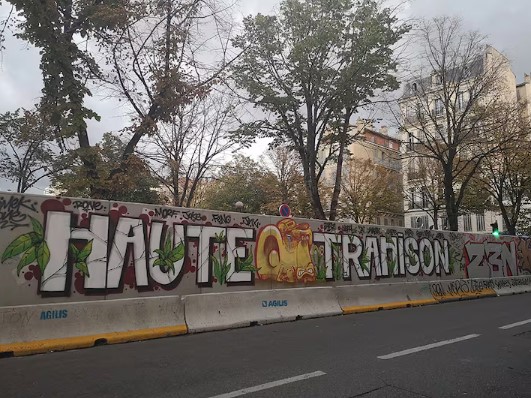
The 2.5-metre wall around place Jean-Jaurès, February 2019
Gentrification,
slowly
The square has reopened. The works are finished. The market is back, but not quite the same. New terraces, new street furniture, a resurfaced ground. Some say it is better. Others say something is missing — that roughness, that discomfort, that freedom of use which meant the square belonged to everyone because it was not pretty for anyone in particular.
What is happening in this neighbourhood is no different from what is happening in dozens of working-class neighbourhoods across France and Europe. Rents go up. Local shops close, replaced by coffee shops and restaurants aimed at a different clientele. Families who had been here for generations leave because they can no longer afford it. New residents arrive — not necessarily bad people, not necessarily aware of what they are helping to erase.
This is gentrification: a slow, structural process with no clearly identifiable villain, and yet a very real social violence. Cours Julien is no exception. For Marseille, it is even one of its most visible symbols.
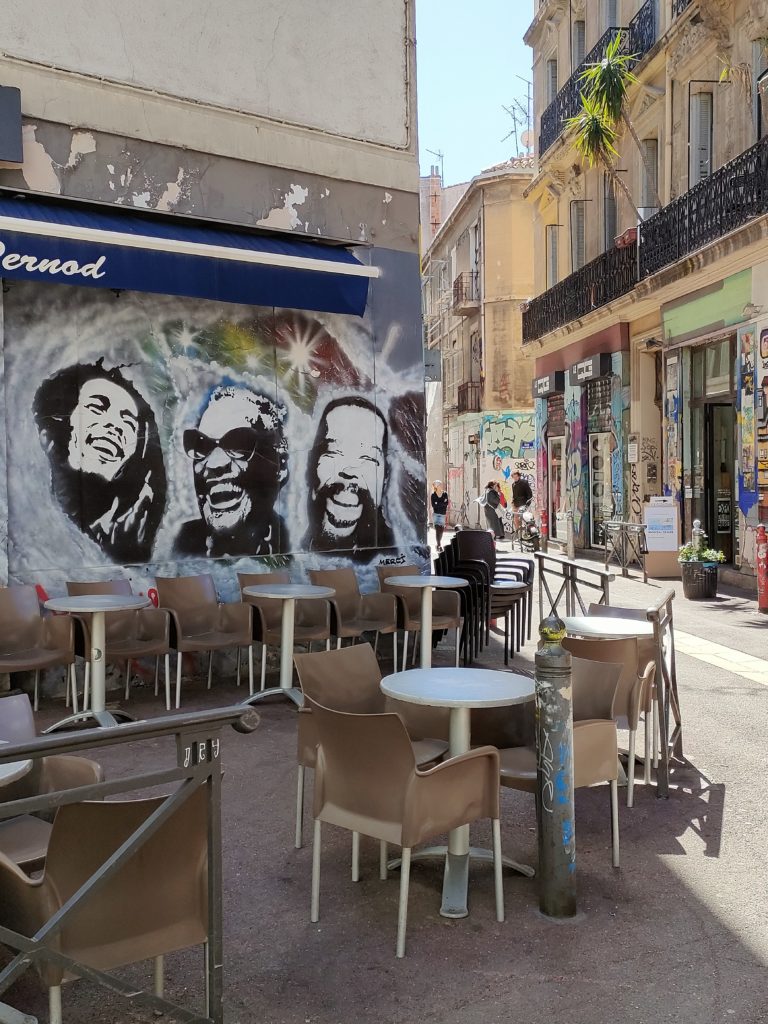
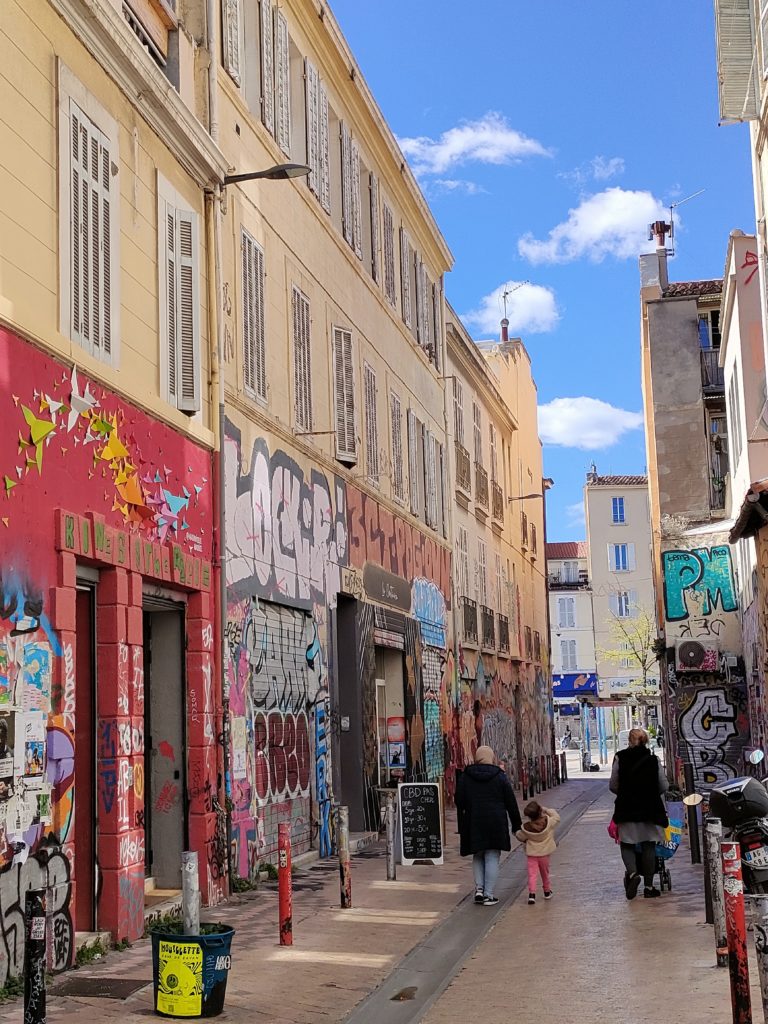
This site lists the neighbourhood’s places as they are today. Bars, music venues, galleries, bookshops, restaurants — places run by people who chose to be here, who take part in neighbourhood life, and who are caught up in the same tensions themselves. It is not a fixed catalogue. It is a snapshot, and it will change.
-
Espace Julien, une aventure musicale à Marseille
editionsparentheses.com -
La Bataille de la Plaine
labataille.primitivi.org